European Accessibility Act (BFSG) 2025: To-Do List for Businesses Before the Deadline

Since June 28, 2025, the European Accessibility Act (BFSG) is in effect in Germany, bringing new legal obligations for businesses. What initially sounds like bureaucratic overhead actually opens major opportunities: Through accessible digital offerings, businesses unlock new audiences, improve their visibility, and create future-proof solutions[1][2][3].
💡 Need Support? Our EAA Compliance Consulting helps you meet all legal requirements and protect your business from fines.
What is the European Accessibility Act (BFSG)?
The BFSG implements EU Directive 2019/882 (European Accessibility Act) into German law and, for the first time, requires private businesses to design certain products and services accessibly[1][2]. The goal is to enable people with disabilities equal participation in digital life while creating uniform standards in the EU internal market[3][4].Who is Affected?
The BFSG applies to all businesses that offer certain products or services to consumers[2][4]. Specifically affected are:Service Providers
- Operators of online shops and e-commerce platforms
- Providers of banking services for consumers
- Telecommunications companies (telephone services, messenger services)
- Companies in electronic commerce (booking portals, customer portals)
- Providers of e-books and digital publications[2][5][6]
Product Manufacturers, Retailers, and Importers
- Computers, smartphones, tablets and their operating systems
- Self-service terminals (ATMs, check-in machines, ticket terminals)
- Internet-connected televisions
- Routers and other telecommunications end devices
- E-book readers[2][5][6]
Exceptions
Micro-enterprises with fewer than 10 employees and annual revenue or balance sheet total of at most 2 million euros are exempt for services. For products, this exception does not apply[2][4][5].What Must Be Implemented?
Requirements are based on internationally recognized standards:Technical Standards
- EN 301 549: European standard for accessible information and communication technologies
- WCAG 2.1 Conformance Level AA: Web Content Accessibility Guidelines for accessible web content
- BITV 2.0: As reference model for private sector providers[7][8][9]
Specific Measures for Websites and Apps
- Keyboard navigation: Complete operability without mouse
- Alternative text for images and non-textual content
- Sufficient color contrasts (at least 4.5:1 for normal text)
- Structured headings and semantic HTML markup
- Screen reader compatibility
- Plain language and error prevention in forms[10][11][8]
Documentation Requirements
- Creation of an accessibility statement
- Feedback mechanisms for users to report barriers
- For products: CE marking and declaration of conformity[6][12][13]
Deadlines and Transition Provisions
What Consequences Threaten in Case of Violations?
Fines
- Up to 100,000 euros for severe violations (e.g., missing CE marking, placing non-compliant products on market)
- Up to 10,000 euros for minor violations (e.g., missing information)[16][17][18]
Additional Sanctions
- Distribution bans and product recalls by market surveillance authorities
- Cease-and-desist letters from competitors or consumer associations under UWG
- Injunctive relief and damage claims[16][19][20]
Monitoring
Monitoring is conducted by the "Market Surveillance Authority of the States for Accessibility of Products and Services" (MLBF) based in Magdeburg[2][21].To-Do List for Businesses
1. Check Applicability
- Conduct BFSG check: Use free online tools[10][22]
- Analyze company size and business sector
- Clarify B2C vs. B2B orientation
2. Conduct Current-State Analysis
- Website audit with tools like WAVE or Google Lighthouse[10][23][24]
- Screen reader test
- Check contrasts (at least 4.5:1)[10][23]
- PDF documents test for accessibility
- Mobile applications review
3. Create Action Plan
- Set priorities: Core functions first
- Develop timeline until June 28, 2025
- Calculate budget and resources
- Define responsibilities[10][23][25]
4. Technical Implementation
- Optimize navigation: Skip links, keyboard control
- Add alternative text for all images
- Build heading structure semantically correct
- Design forms accessibly
- Improve color contrasts
- Add captions to videos[26][23][11]
5. Documentation
- Create accessibility statement and publish
- Implement feedback mechanism
- Provide contact options for accessibility inquiries
- Document measures for evidence[10][26][23]
6. Training and Awareness
- Train employees: Developers, designers, content managers
- Create awareness for accessibility in the team
- Designate contact person for accessibility[26][27]
7. Continuous Review
- Schedule regular audits
- Evaluate user feedback and implement
- Check updates and new content for accessibility
- Maintain standards during changes[26][23]
Why Accessibility Pays Off
Business Benefits
- New audiences: 7.8 million people with severe disabilities in Germany[28]
- Better conversion rates: Up to 20% increase in accessible online shops[12]
- SEO advantages: 12% more organic traffic through clean, semantic code[12]
- Improved usability for all users[29][30]
Image and Responsibility
Free audit of your website
Let us check your website for accessibility – free and non-binding
Topics:
Weitere Artikel
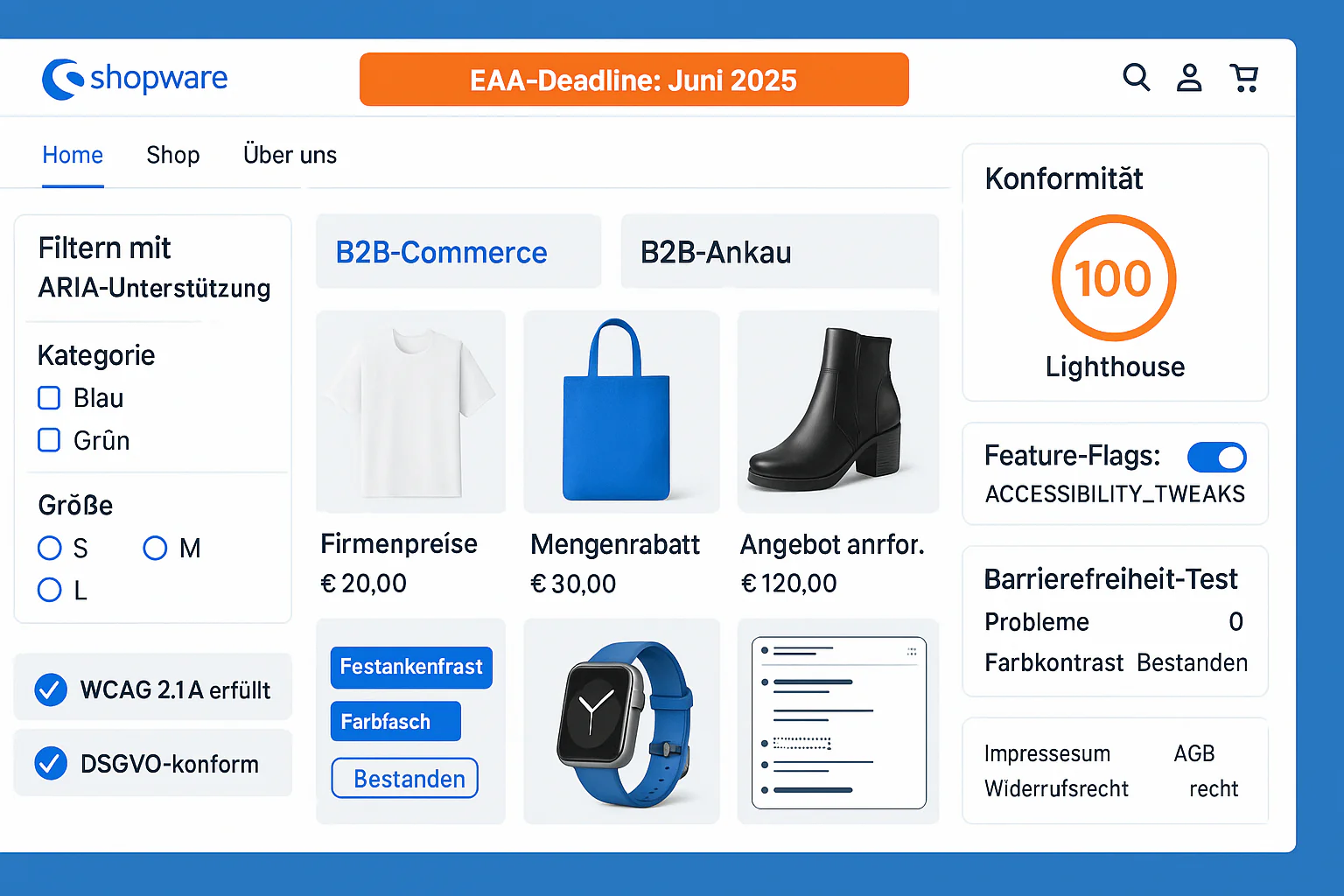
Shopware 6 Accessibility: EAA Compliance Guide for E-Commerce
Shopware 6.7 Accessibility Guide 2025: Built-in WCAG 2.1 Features, EAA Compliance, B2B Features - Achieving Perfect 100/100 Lighthouse Score.
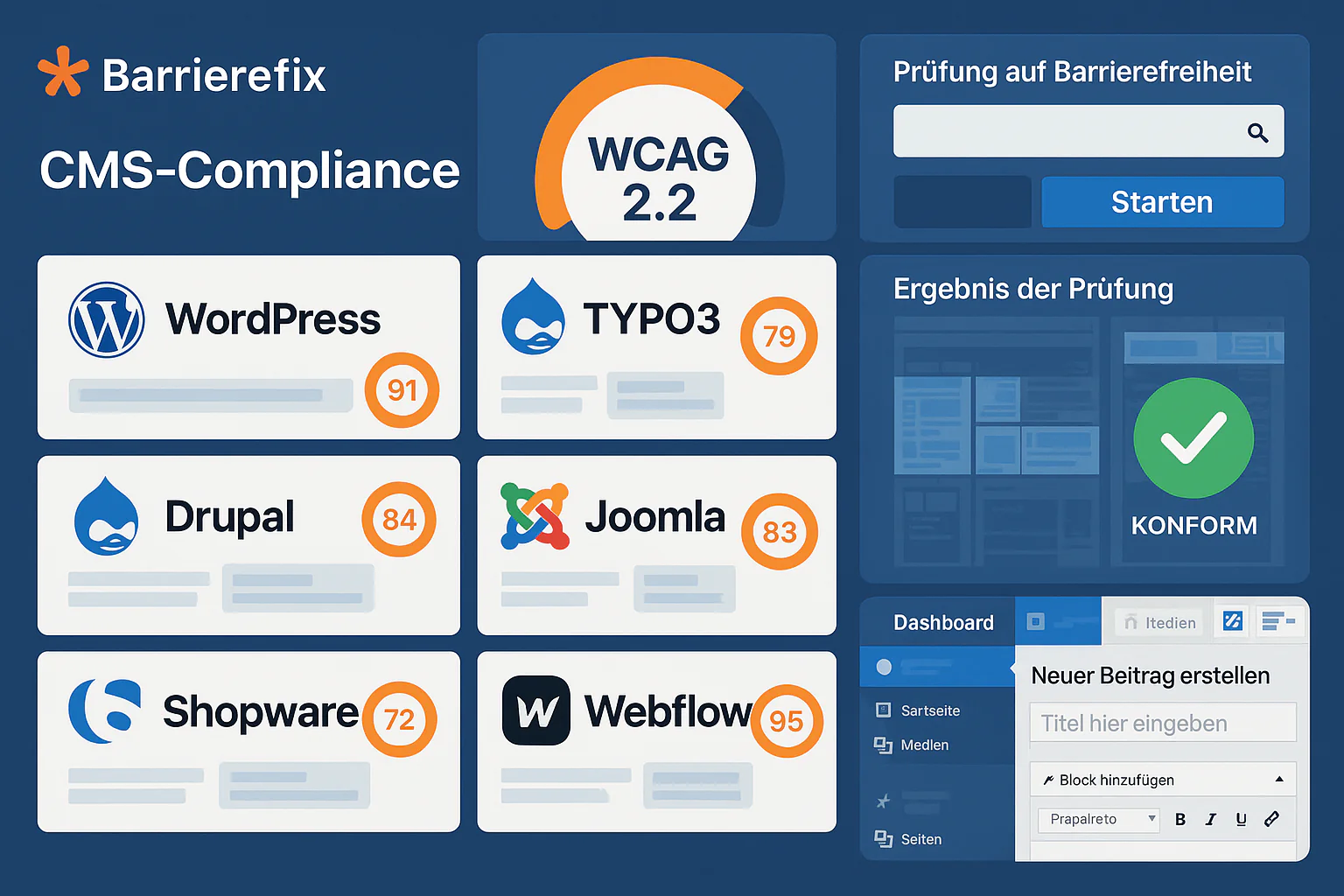
Web Accessibility for All CMS Systems: The Practical Guide
Complete CMS accessibility comparison 2025: WordPress, TYPO3, Drupal, Joomla, Contao. WCAG compliance, costs, plugin ecosystem and BFSG readiness for German companies.
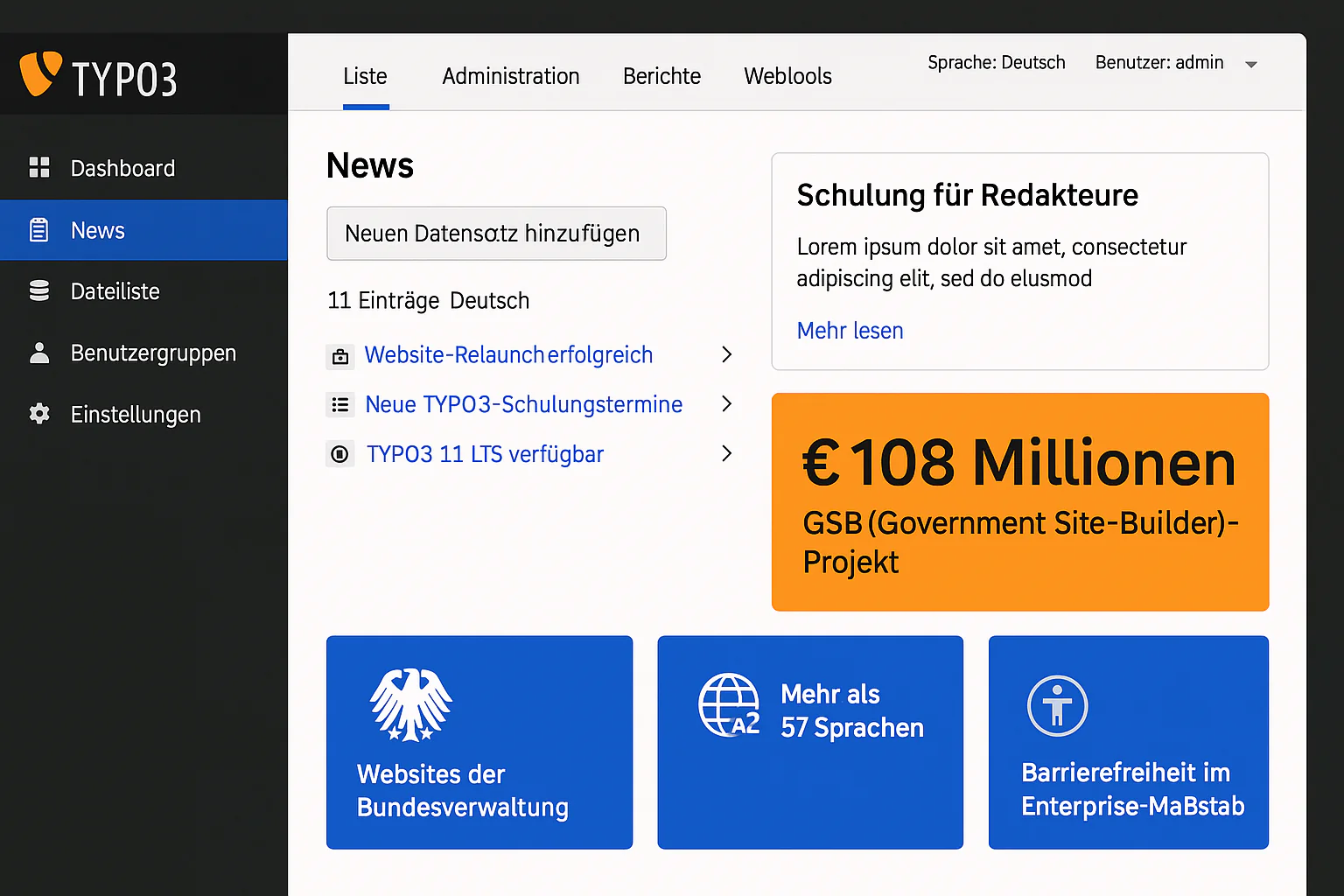
TYPO3 Accessible News: Editor Guide for Enterprise CMS
TYPO3 Enterprise Accessibility Guide 2025: Built-in WCAG 2.1 Features, Multi-Language Support, Government-Scale Implementations - €108M GSB Project Experience.